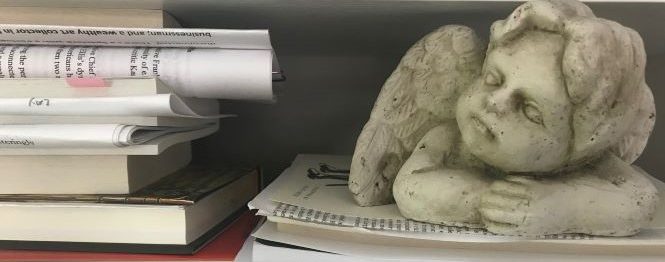
My planned summer reading is a mix of books published this season and books I’ve always wanted to read but keep putting off, as if there will be a magical time when I’ll get to them. That’s what you’ll find here. It’s a manageable list of promised-to-myself five for the month of June, plus a biography I hope to get to that likely will overflow into July.

A few weeks ago, I was offered a copy of Dirt Creek , its newly released paperback edition, by the publisher. I recognized the title – the author’s hardcover debut received heaps of praise last year and was compared to the best selling novels of Jane Harper (as in, “great for fans of Jane Harper”). I’m not a Jane Harper fan, after being disappointed by her novel Force of Nature. (I’m an outlier; the book has thousands of raves.) I was tempted not to be swayed by the comparison, but then time passed and other books took my attention. The paperback offer came at the right time; I was in the mood to get lost in a good mystery, and I decided to go for it. In a small town in rural Australia, twelve-year-old Esther walks home from school with her BFF Veronica. She turns off at the church, as she always does, waves good-bye to “Ronnie,” and never arrives home. Author Hayley Scrivenor tells us in the first chapter Esther’s fate — and from there unfolds an engrossing complexity of events that have captivated me every night since I started the book.
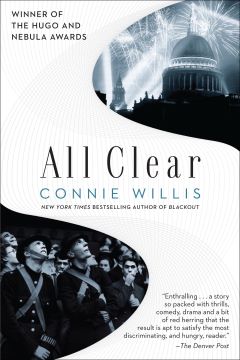
Now to some science fiction, and a book that’s been too long on the reading table. All Clear by Connie Willis is the follow-up to Blackout that I read eons ago. Even though Blackout ends with a cliffhanger, I let the conclusion wait. (It’s me, not the book. I do this all the time.) The story is about three British historians in the year 2060 traveling back in time to study firsthand the Dunkirk evacuation and the London Blitz in World War II. At the end of Blackout, they’re trapped (the cliffhanger) in 1940s England, unable to get home due to malfunctioning portals. Now, in All Clear, they need to be rescued. Worse, there’s concern history may have been altered by their presence, despite the fundamental tenet that time-traveling historians cannot change the past. From the back of my paperback copy: “When discrepancies in the historical record begin cropping up, it suggests that one or all of the future visitors have somehow changed the past – and, ultimately, the outcome of the war.” And I love this part: “The thrilling time-tripping adventure that began with Blackout now hurtles to its stunning resolution in All Clear.”
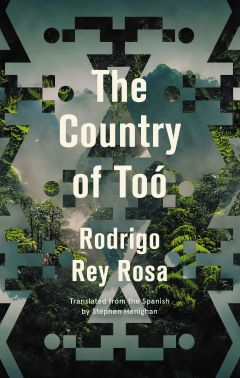
Set to release July 11 from publisher Biblioasis, Rodrigo Rey Rosa’s The Country of Toó [pronounced “toe-oh”] is described as a gripping thriller about power and redemption, a theme that sounds particularly intriguing. Its focus is on a Guatemalan businessman’s enforcer known as the Cobra. When he is ordered to kill a human rights campaigner “a last-minute stab of conscience brings him into conflict with drug-dealing oligarchs.” (I’m quoting and summarizing from the back of the ARC sent to me by Biblioasis and the online book description.) Now a marked man, the Cobra hides from his patron in a remote Mayan community that is fighting predatory mining companies whose people could care less about the environment. “With danger encroaching, the Cobra is forced to confront his violent past and make a decision about what he’s willing to risk in the future, and who it will be for.” The book is translated from Spanish by Stephen Henighan.
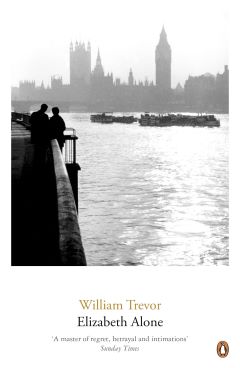
I’m continuing to fit William Trevor’s novels into my reading, this time Elizabeth Alone. From the U.K. Penguin Books 2015 edition’s description: “After nineteen years of marriage, three children, and a brief but passionate affair followed by a quick divorce, Elizabeth Aidallbery has to go to hospital for an emergency operation. From her hospital bed she has the leisure to take stock of her life. … No doubt she could put her life back in order. But need that involve all those people who cause her so much heartache?” The novel originally published in 1974. Kirkus Reviews wrote this in their review that year: “Again Trevor patiently stalks the blind tracks and intersections of little lives — with wry-to-hilarious humor, a trace of sorrow and unwavering scrutiny. And as a story — it’s irresistible.”
Why read William Trevor? Because he’s a legendary Irish-born author (1928-2016) whose canon of work, most notably his short story collections and novels, contributed to the bedrock of Irish literature. The New York Times, in a review of his short story collection A Bit on the Side, said: “What other living writer could so regularly follow his own masterpieces…with another and another? Year after year they come, novels, collections of stories like these–treasures of gorgeous writing, brilliant dialogue, and unforgettable lives.”
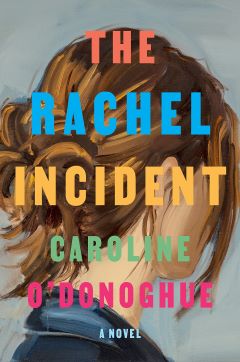
On to a living Irish author. Caroline O’Donoghue’s new novel The Rachel Incident will be released at the end of this month, the story of a girl who falls in love with her married professor, Dr. Byrne. Her best friend James helps devise a way to get them together. From the book’s description on England’s Waterstones website: “But what begins as a harmless crush soon pushes their friendship to its limits. Over the course of a year they will find their lives ever more entwined with the Byrnes’ and be faced with impossible choices and a lie that can’t be taken back.” This is something I could see as a Mozart opera, a romp of unrequited love and triangulated hilarity, considering it involves (from the U.S. book description) “a series of secrets and compromises that intertwine the fates of James, Rachel, Fred [the professor], and Fred’s glamorous, well-connected, bourgeois wife.” I stopped reading the previews, worried there would be spoilers, so I’ll just say there’s much praise going on about this new novel, and I’m looking forward to a light-hearted read.

Finally, that biography I mentioned. It landed on my TBR want list after I read an article written by James Atlas, author of this Delmore Schwartz biography. In “Headed for the Graveyard of Books” published Sunday, February 12, 2017, in The New York Times Book Review, Atlas acknowledged that his first book, Delmore Schwartz: The Life of an American Poet, likely was on its journey to oblivion. Then he shared why he wrote this stellar biography as well as a biography about author Saul Bellow: “There were things I urgently needed to know.” Of Delmore Schwartz: “Why did Schwartz, the most promising poet of his generation, end up dying at the age of 52 in a fleabag hotel in Midtown Manhattan?” I also wanted to know the answer, when I read that article, and I still want to know it six years later.

 The Longest Chapter
I assume you know Delmore Schwartz was the model for Bellow’s Herzog. Both lived hard lives and neither were lovable.
LikeLiked by 1 person
Ah, you’re close, but I think you mean Von Humboldt Fleischer in Bellow’s novel Humboldt’s Gift. He’s the fictional character Bellow created with Schwartz in mind. I always thought Herzog was based on Bellow’s own life (all those wife problems!). Thanks for this connection. I’d forgotten!
LikeLike
Yes! Of course. Cheers.
LikeLiked by 1 person