Here’s a wonderful/hilarious collection of short stories about the way love kidnaps us by its jealousies, denials, and helplessness. Humor aside, Fools for Love is written with insight and also a touch of sadness for those who never get over a lost love.

The lead characters all surprised me with their distinctive quirks, like the self-centered baby who starts his story, “From the get-go, I am fabulous.” And the woman who signed divorce papers with her first husband “but on no occasion had I had the energy to get up from my desk to actually file them.” (Whoops!) She’s a divorce attorney and on her second marriage. “Which was sort of dangerous, right?” Then there’s Hershleder, my favorite, a doctor and researcher who’s played it safe all his life and thinks:
Hadn’t this gone on long enough?
The stories are linked by way of characters showing up in each other’s stories. It’s gratifying to catch their appearances, to see a different side of them, and how they’ve changed, or not. There’s much to laugh about and also much to think about. Schulman appears to be exploring a comment made by playwright Sam Shepard in an interview: “Love is the only disease that makes you feel better.” She takes her book’s title, slightly modified, from Shepard’s play Fool for Love.
I’ll be in conversation with Helen Schulman July 22 at Gramercy Books in Bexley, Ohio. You can register here.

I started reading this new novel by Linn Ullmann while I was already reading two other books. After closing a window shade in the dining room for the night, I walked passed Girl, 1983 on the table and wondered if I might want to read it next. It’s the author’s seventh novel, and the second in what might become a trilogy, following her novel Unquiet. Girl, 1983 is the story of a sixteen-year-old girl’s haunting experience in Paris that spins around a photograph taken of her by a FrenchVogue photographer referred to only as K. From the press release:
For the narrator … this photo, or rather, her memory of this photo, summons an entire history, one that is both unwelcome and insistent.
I thought I was only going to read the first page and go to bed, but by the time I put the book down, I was sitting in a chair and well beyond page fifty. It’s engrossing, a mix of memoir, fiction, and reflection. Ullmann is the daughter of famed Norwegian actress Liv Ullmann. Because there’s a hovering sense this is likely more truth than fiction, there’s a gripping seduction from the reading. Girl, 1983 releases July 22. Translated from the Norwegian by Martin Aitken.
Finally, this. The adult narrator takes us into her sixteen-year-old head space with unnerving emotional accuracy. Here she describes herself watching another teen model in K’s studio whose expression “means to say she’s bored to death.”
She can’t fool me. The trick is to vacate your eyes. Split yourself in two. Become yourself and someone else at the same time. And then let that someone else — your invisible ghost sister — be the one doing the looking. Give her your gaze. Give her your fear, your awkwardness, your desire, your rage … your hope, your immaturity.
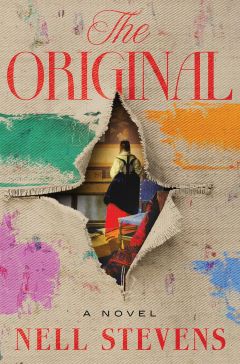
From the book’s description: “In a grand English country house in 1899, an aspiring art forger must unravel whether the man claiming to be her long-lost cousin is an impostor.” So begins what sounds like an intriguing story in The Original. (Kirkus Reviews says readers will be on tenterhooks.) Grace, the protagonist, described as “an outsider,” has grown up in the aforementioned country house. But now, she’s “a self-possessed and secretive young woman [who’s] developed unusual predilections: for painting, particularly forgery; for deception; for other girls.” The money she makes selling her forgeries to fraudulent dealers is to fund her escape from the oppressive environment at the country house. Meanwhile, a letter arrives from the South Atlantic with the writer stating he’s her cousin Charles, the one everyone thought died at sea. He arrives at the house, welcomed and embraced by the aunt, but not everyone believes he is the relative he claims to be.
As a court date looms to determine his legitimacy―and his claim to the family fortune―Grace must decide what she believes, and what she’s willing to risk.
The forgery/imposter dynamic sounds like a richly developed and explored theme. Kirkus Reviews describes Charles as “what may be a walking, talking forgery” in their praise of this new novel.

 The Longest Chapter
Fools for Love sounds right up my street. I enjoyed The Original. Very cleverly executed.
LikeLiked by 1 person
I think you’ll enjoy “Fools for Love”. Schulman so cleverly uses humor to get us to think about love, and then what appears to be love but may not be. Good to hear your thoughts about “The Original”!
LikeLiked by 1 person