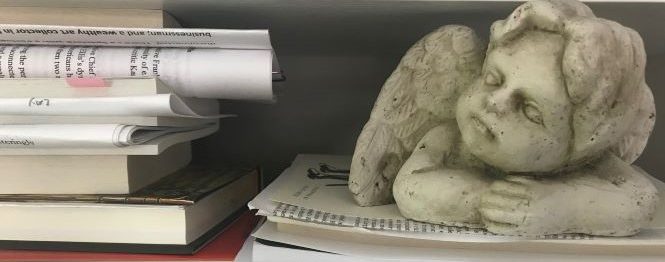
So many books are being published these days, hundreds each week in adult fiction and nonfiction, that it’s hard to keep up. I sometimes feel breathless about it, as if I’m driving toward some end point that remains out of reach. It’s not about reading every new book, rather I want to feel I’ve got a sense of the current publishing scene, to be aware of the books and authors being published. I’ve been at this long enough to remember a time when that was possible.
To relieve my breathlessness, I visit a certain local, independent bookstore. When it opened a couple years ago, I recognized immediately that its buyer curates the selections with astonishing literary acumen toward the world of books, a wide lens that views not just the media infused hoopla over the new but also books not to be forgotten. As example, on my first visit, there in general fiction I saw Europe Central by William T. Vollman. It’s the novel that put Vollman on the map in 2005, when it won the National Book Award for Fiction. He’s a prolific author and not an easy read. Neverthess, he has fans. I’ve met one who half leaped out of his chair with excitement when I told him I’d met Mr. Vollman. Also on that first bookstore visit, I came upon and purchased Angel by Elizabeth Taylor.

I’d never heard of the author Breece D’J Pancake, until I read Jayne Anne Phillips’ Small Town Girls: A Writer’s Memoir. Published this past April, it’s a collection of connected essays about her West Virginia roots. Jayne Anne Phillips became a literary sensation in the 1970s with her short stories, and then with her first novel Machine Dreams in 1984. You may be more familiar with her fiction published in this century, e.g., the 2024 Pulitzer Prize-winnning novel Night Watch.
In Small Town Girls, she devotes a chapter to Breece D’J Pancake, his life, and his exceptional work:
The ancient hills and valleys of southern West Virginia remain Breece Pancake’s home place. The specificity and nuance of his words embody the vanished farms, the dams and filled valleys, the strip-mined or exploded mountains. His stories of lives informed by loss and wrenching cruelty remain startling and immediate, and retain their dignity.
Breece D’J Pancake was born in West Virginia in 1952. He took his own life in 1979, age 26, two months before his 27th birthday. Browsing in the bookstore (my oasis) the other day, I saw The Stories of Breece D’J Pancake. I had to take it home with me, given not only what I’d read in the memoir but also the bits I read in the book as I looked through it. Back home, I read the first story, “Trilobites,” and felt grateful I’d found the book, or should I say, it found me. Jayne Anne Phillips writes: “His fiction is the world he lived in, the world he made.”
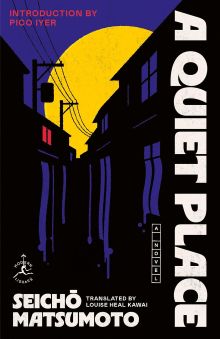
Seichō Matsumoto (1909-1992) is one of Japan’s best known authors of crime fiction. “His exploration of human psychology and Japanese postwar malaise, coupled with the creation of twisting, dark mysteries, made him one of the most acclaimed and bestselling writers in Japan.” Additional words about him on the back of this book include, “Hailed as ‘Japan’s Agatha Christie.'” (The Sunday Times).
Last year, I enjoyed Matsumoto’s Inspector Imanishi Investigates, set in Tokyo in the 1960s. It solves a complex puzzle of a man’s death that occurred on train tracks with only two clues: the deceased man’s distinctive accent and a single word, kameda. Last month, I read Matsumoto’s Suspicion in which circumstantial evidence assuredly points to a woman who claims her innocence. She’s accused of intentionally driving her car off a pier to drown her husband in the passenger seat. While she’s in jail awaiting her trial, a tabloid journalist wrecklessly publishes condemning articles about her. They’ve captured a huge readership. Tension builds when the woman’s attorney drops out and a keen public defender takes on her case. If she’s acquitted, the journalist realizes, he’s in danger.
On the bookstore’s mystery shelves, I found another one of Matsumoto’s novels, A Quiet Place. It’s described as “a haunting portrait of a man undone by what he cannot know.” Also on the shelf was Matsumoto’s Tokyo Express, considered his masterpiece. An incident looks like a lovers’ suicide, but then it isn’t. These are the moments that make bookstore shopping so enticing, the discovery of two books, then the indecision of which to choose, reading a page and dustjacket texts, then carrying both, while continuing to shop, and then knowing which one to put back. On another day, I’ll buy the masterpiece.
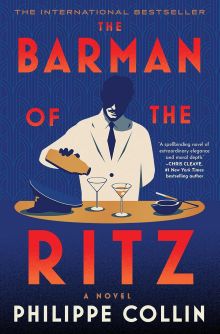
The Barman of the Ritz is a new September release. I’d read about it in the season’s forecasts, but it was the commentary and praise from a fellow blogger at A Life in Books that got my attention. I could’ve requested a review copy, purchased it online, or reserved a library copy, but it was spending time with it in the store that made the difference. I walked out with it in the bag, along with Breece D’J Pancake and Mr. Matsumoto. Here’s what it’s about.
In Paris 1940, The Ritz Hotel remains open during the German occupation. Frank Meier, the Ritz barman, is Jewish. Nazi officers whom he serves are not aware of this. According to the novel’s description, Frank forms precarious alliances with unlikely accomplices to protect Jewish families and his own. More from the description:
Inspired by real events, with the highest of stakes and a brilliant protagonist, The Barman of the Ritz is a heady cocktail of history and fiction set in one of Paris’s most glamorous places, diving deep into the impossible choices of an ordinary man in extraordinary circumstances.


I hope you enjoy The Barman of the Ritz as much as I did. Collins deals so well with the moral complexity of the Occupation. I’ve never come across Breece D’J Pancake before. I wonder if his work is available here in the UK. I remember Machine Dreams having quite an effect on me when I read it many years ago but haven’t read anything by Phillips since.
LikeLike