
A couple of weeks ago, I gave a presentation. That sounds too formal; I wasn’t on stage, and I knew the handful of listeners. They were a group of readers I meet with every October, offering options for their book club to consider for next good reads. A few of the recommendations I’ve already explored on The Longest Chapter. I thought I’d share the others.
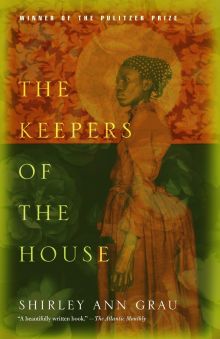
Not all books I recommend to the group are new. This year, I brought The Keepers of the House by Shirley Ann Grau. It won the 1965 Pulitzer Prize for Fiction, an immersive story set in mid-20th century rural Alabama. The book opens with Abigail, granddaughter of William Howland, vowing to punish the county residents for violently turning against her family. The story looks backward in time to explain, focusing on the widowed grandfather, who raises his daughter, also named Abigail, with the help of his Black housekeeper, Margaret Carmichael. What struck me most about this story was the strength of William’s character, able to stand firm in the changing times of the Deep South. When his daughter asks him to subscribe to The New York Times, the local postmaster declares there must be some mistake, subscription to a Yankee newspaper? Since the 1800s, the Howland family has lived on their land and held prominence and distinction in the area. The scene speaks volumes about this good man when he doesn’t explain or make an excuse, while gossip spreads. The deeply involved narrative leads up to quite a surprise. What you think is going on will get turned on its head. I recommended the book because it’s one of those novels every reader hopes to find that’s hard to forget.
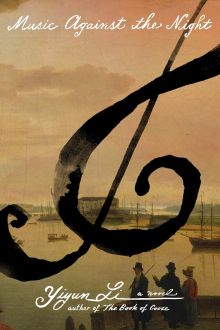
Music Against the Night by Yiyun Li released a few weeks ago. It’s a novel about the Irish composer and pianist John Field and his wife, Adelaide Percheron, also an ambitious pianist. It takes place in the late 18th and early 19th centuries. John Field, born into a family of Irish musicians, quickly is recognized as a young prodigy at the piano. His musical parents believe he could be the next Mozart. The young Field studies with eminent musicians and performs throughout Europe. Meanwhile, Adelaide, growing up in India, raised by her grandmother, discovers a love for the piano. She journeys to France where she pursues this passion. Their studies, performances, and struggles for success take place during historically changing times, with the Napoleonic Wars and the rise of the Romantic Era in music. Something not widely known: John Field (1782-1837) is the creator of the nocturne, a piano work usually attributed to his contemporary, Frédéric Chopin (1810-1849). Long ago, I purchased a CD of Field’s nocturnes, curious that I’d never heard of him or them. Chopin immortalized the form with his more famous compositions. I chose to recommend the book for its richness in story and history.
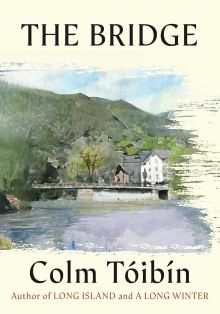
It’s often nice to have a short novel at hand, something that won’t take days or weeks to read. So I recommended The Bridge by Colm Tóibín, set to release December 1. Miguel and his father live in a secluded valley in the Pyrenees. A bridge is to be built providing greater connection to the outside world, something Miguel fears will bring disaster and his father sees as opportunity. They are characters from Tóibín’s A Long Winter, a story in his collection Mother’s and Sons (2006). A Long Winter was published as a standalone novella last year, likely as a precursor to publishing The Bridge this year. It’s about the disappearance of Miguel’s mother in a sudden snowstorm. There’s a great search for her, and a belief she intended to walk to her family home, the very home Miguel and his father now live in. I left it up to the group to decide if they wanted to read A Long Winter first. The Bridge stands alone and explains why they’re in the house.

Sebastian Faulks is an admired and prolific British author. He’s published 17 works of fiction, including Farewell to Eden. The story follows protagonist Philip Deval, a British WWII soldier who takes part in a military peace-keeping mission in Palestine in 1946. These are the end times of the historic British Mandate, whereby Great Britain was given administrative control of the territory after WWI and the end of the Ottoman Empire. Shortly after Deval arrives, the historic bombing of Jerusalem’s King David Hotel happens, July 22, 1946. The story in Palestine takes on the questions of Arab and Jewish ownership, as well as those of faith, in this Biblical land. Deval in later years teaches at a school in England where a friendship with a music teacher develops. Their conversations open up Deval’s past, and bring her story into the picture. I recommended this novel for its history and deeply involving storyline. Plus, it’s nice to have something to look forward to: Farewell to Eden published in the U.K. this fall but won’t be released here until January. The Guardian writes: “It is a novel that asks us what we might do when unavoidably faced with our own imperfection and fallibility, and is wise and sober in its refusal to trumpet answers.”


