January was a month when I swung widely among many types of books, not only in genre but also topic. To start, Ingrained: The Making of a Craftsman, not a topic I’d typically be drawn to. That changed thanks to what I read about the memoir when it published in December.
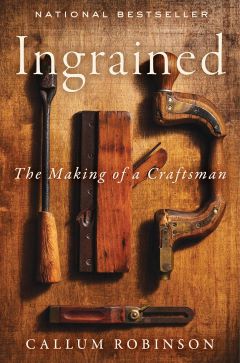
Callum Robinson writes about his trade as a woodworker, owning a workshop that employs a small team as passionate about bespoke furniture as himself. They build one-of-a-kind desks, cabinets, chairs, and tables for commercial clients. This memoir begins when a huge project that will carry them through the year, cover a hefty bank draft, and pay wages (all their eggs in this basket) falls through. Robinson’s personal story of living on the edge of financial ruin is told with soul-searching candor and many panic attacks. He discovers working for individuals and the legacies of the wood furniture are what matter most:
It’s the wood, it’s the people who live by it…and it’s the stories that are locked inside.”
His wife Marisa, the architect and clear-thinking steadiness, is a delight. So too Robinson’s father and the stories of their relationship: from Callum’s beginning years of learning his father’s trade to his father’s help during the difficult time. The win-or-lose determination energizes the story, but the characteristics and behaviors of the wood, as Callum Robinson writes about them, provide the appealing depth.
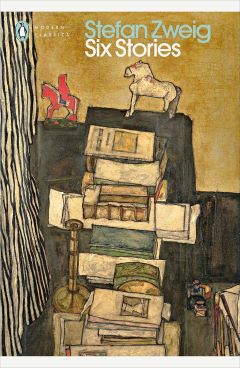
Six Stories by Stefan Zweig: I’ve returned attention to my unread books by Stefan Zweig, one of the most famous Austrian-Jewish writers of his time in the 1920’s and 1930’s. His books were instant bestsellers. At the peak of his fame, the threat of Nazi Germany drove him out of his beloved homeland to England, New York, and finally Brazil, where he took his own life in the 1940’s. These six stories (one the length of a novella) are among his best, illustrating individuals caught up in forces beyond their control. They include an art dealer who visits a former client who’s now blind but “sees” each of his valuable possessions by touch; and a barely surviving Russian soldier who’s rescued from paddling across Lake Geneva, trying to return home from the war; and an employer whose house servant, given to odd, reclusive ways, becomes obsessively devoted to him. The plots develop slowly to endings that are intensely, humanly perceptive.

If you’re not familiar with Zweig, but curious and prefer a novel, I suggest starting with his novella Chess Story. A world chess champion on a ship from New York to Buenos Aires plays the game with the passengers, whom he sweeps away in defeat. Then a stranger offers advice on how to beat the champion. It’s suspenseful and deeply affecting.

The Man Who Died Laughing by David Handler: I’ve been meaning to try this mystery series for a while, so purchased the first book originally published in 1988, a vintage paperback edition. The amateur detective Stuart Hoag, known as “Hoagy,” is introduced as a wildly successful novelist whose debut became a bestseller. But writer’s block and a divorce with a popular Broadway actress reduced his living situation to a small apartment, alone with his basset hound Lulu and a struggle for income. He’s approached by Sonny Day, an aging Hollywood comedian who wants Hoagy to ghostwrite his memoir. A guaranteed bestseller, considering Day is planning to pull back the curtain on a long-held gossipy secret. Laugh-out-loud humor, clever dialogue, and a smart plot kept me reading. Eager to keep going, I found a vintage paperback edition of the second book. (The early Stewart Hoag books are no longer available in print.)
In March, a new book in the series is to be released: The Man Who Swore He’d Never Go Home Again. One doesn’t need to start at the beginning, like I did. From the new book’s description:
Readers will be delighted to return to where it all began and experience Lulu’s very first case in this charming installment of the Edgar Award-nominated Stewart Hoag series.

Driftless by David Rhodes: I recommended this novel on the last book show and can’t help recommending it again. Rhodes was a much-heralded young novelist in the 1970s. He went silent after a motorcycle accident paralyzed him from the chest down. Driftless, released in 2008, about contemporary life in rural America, was his much-anticipated return. His insight into his characters, the intimacy with which he knows and creates them, stand his work apart. With short chapters, an insistent need-to-know curiosity, I couldn’t help myself turning the pages, immersed. One of the plotlines includes a fraudulent milk cooperative taking money from the dairy farmers, and the wife of one of them raising the alarm. Praised by the Chicago Tribune as “The best work of fiction to come out of the Midwest in many years,” it’s one of the best books I’ve read in a long time.

Finally, on the award scene, the National Book Critics Circle has announced the finalists for its 2024 awards (find the NBCC finalists here). The longlist of novels for the Dublin Literary Award is also available (find the Dublin longlist here). Both offer great browsing opportunities for new books to read. Daisy Fay, my cardigan welsh corgi, finds it all quite exciting.

 The Longest Chapter
Driftless sounds very appealing. Daisy Fay has magnificent ears. Crying out to be stroked!
LikeLiked by 1 person
I have a feeling you’d enjoy Driftless. His rural world is similar to Laird Hunt and Niall Williams. And Daisy Fay does have enormous, soft ears!
LikeLiked by 1 person
I read a few of the “Hoagy” series years ago and thoroughly enjoyed. I think time to pick a few back up. Good reading for overall mental health! Also placed a hold on Chess Story, a new author for me. Thanks!
LikeLiked by 1 person
I’m glad to hear you’ve enjoyed the Stewart Hoag mysteries. That gives me even more encouragement to stay with it. Good mental health feels spot on! I hope you enjoy Chess Story, and this new author for your reading.
LikeLike