Over the past four months, a few pages every day, I read the biography of Saul Bellow, the great American novelist who penned The Adventures of Augie March and later Herzog and Humboldt’s Gift. At the end, page 611, I felt a sadness, as if I’d spent a summer with a friend and now, I had to leave and go home. That’s a testament to the late James Atlas, the biographer who created more than a world of facts and life events but the character of Bellow, his five marriages (he had trouble forming permanent attachments), his fidelity to Chicago (where he grew up and lived, a place that held his deepest emotions), his fame (he won the Nobel Prize in Literature), and his literary genius. A critic wrote this in 1971:
[Saul Bellow] has come to his eminence not through the mechanics of publicity, self-advertisement or sensationalism, but through slowly building up a body of work, an oeuvre, that with each new novel has displayed greater range, solidity, penetration and brilliance.
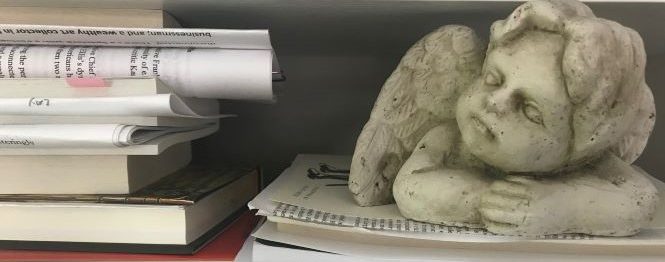
The book illustrated here is not Bellow: A Biography (a boring head shot of the subject) but of Saul Bellow’s collected short stories. Perhaps a way to get to know this author, if you’re curious.

The Horse is a new novel by Willy Vlautin, an engaging, heart-felt story that was exactly what I needed when I read it. It’s so delightful, its focus on Al Hard, a tired, lonely man in his sixties, who lives on an isolated mining claim in central Nevada’s high desert. He plays his guitar and writes lyrics, heats instant coffee and canned soup on the wood stove, and takes walks in the snowy, winter cold. One day, he sees a horse in the front yard. It just stands there, and it won’t eat anything Al gives it. The horse is half blind, his coat dirty-thick and scarred, his attitude indifferent, weary. Al tries to take care of the horse but has no barn or hay, and his car won’t start, so he can’t drive to the nearest neighbor or town for help. They are miles away. He hopes the horse will disappear, as magically as it appeared. He also worries it might be a figment of his imagination, that he’s losing his mind.
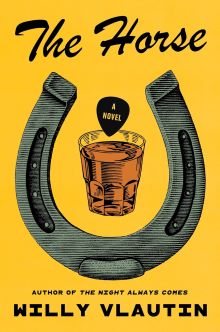
As Al lives his routines and frets about the horse, he remembers his life as a musician, how he came to be a successful guitarist in bands playing bars and casinos, his ups and downs with women and alcohol, and the songs he wrote that the bands played and recorded. He’s a good person, a likeable protagonist, happy with his life, although sad about it, too. There’s a great moment when he’s just turned forty, no longer playing, and two brothers in their twenties ask him to join their band. I’m old, he tells them. They won’t take no for an answer. They grew up listening to the records their father played of Al’s songs. Their father, also a guitarist, called Al “the real deal.” Al gives in, and that tour is one of his finest. What happens to the horse? It’s the best ending ever.
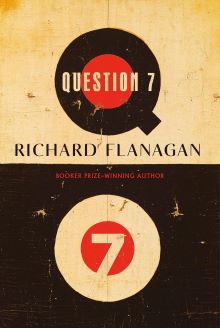
Another new book that won me over is Richard Flanagan’s nonfiction Question 7. This book is not easily labeled, as it ranges among genres: memoir, science, history, moral philosophy. It’s all of that, opening with Flanagan’s visit to the site of Ohama Camp, Japan, where his father could’ve lost his life as a POW slave laborer, but survived. The World War II POW experience (which Flanagan also wrote about in his award-winning novel The Narrow Road to the Deep North) provides the passport to his subjects, ingeniously connecting them as he writes to figure out life questions.
We read about his growing up in the rainforest of Tasmania, and his strong, thoughtful parents; the famous physicist Leo Szilard’s discovery that played a role in the development of the atom bomb; the bombing of Hiroshima; the love affair between authors H.G. Wells and Rebecca West, because Wells’ book The World Set Free influenced Szilard; Aboriginal Tasmanians erased by English settlers; and Flanagan’s traumatic experience river-kayaking when he was twenty-one. It all comes together in the end.
Early on, Flanagan sets the stage for what he’s doing with this book and its many narratives:
Sometimes I wonder why we keep returning to beginnings — why we seek the single thread we might pull to unravel the tapestry we call our life in the hope that behind it we will find the truth of why.”
Flanagan’s novel The Narrow Road to the Deep North won the 2014 Man Booker Prize. I skipped it — that was a mistake, but it was because Flanagan’s previous novel Wanted didn’t live up to my expectations. With Question 7, the momentum was so strong, a fascination to keep reading, interruptions frustrated me. This is a stand-out book written with a deep love for his parents and homeland, and a knowledge that life is precious, which for Flanagan appears to remain ever-present. His exploration of moral quandaries takes us into human spaces that cannot be simplified.

 The Longest Chapter
Enjoyed your synopsis of The Horse. To me it sounds oddly familiar like someone I might know. Life!
LikeLiked by 1 person
Thanks for your comment. Love it!
LikeLike