Most readers are aware of the Pulitzer Prize for Fiction, which this year was given to Barbara Kingsolver’s Demon Copperhead and Hernan Diaz’s Trust. Other significant literary awards, however, don’t get the same level of highlighted media attention, and so likely don’t get noticed. Several have been given recently for crime fiction, LGBTQ literature, women’s fiction, science fiction, and more. Here’s a look at some of them. If you’re needing guidance on what to read this summer, reading award/prize winners is an easy way to make a list, with satisfying results. Note: Some of the awards here have multiple categories, all of which I don’t list. Visit the award websites for the full monty.
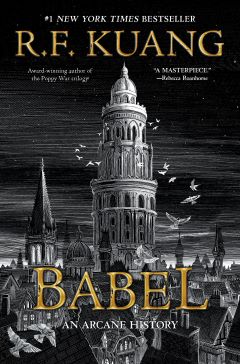
The 58th Annual Nebula Awards took place last month, and the Nebula Award for Novel went to Babel by R.F. Kuang. The Nebulas are given to writers of the most outstanding works of speculative fiction, including the category Game Writing (interesting!). Babel: Or the Necessity of Violence: An Arcane History of the Oxford Translators’ Revolution sounds fascinating, set in early 19th century Oxford, England, at the Royal Institute of Translation, a.k.a. Babel. Here, a student must come to terms with the magic he encounters and the “shadowy Hermes Society.” A whopper page count at 560, but it sounds like a rabbit hole that’s a great literary sci-fi escape.
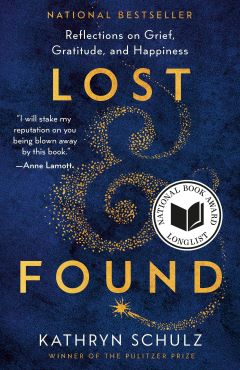
The 35th Annual Lambda Literary Awards (often referred to as the Lammys) celebrated the best LGBTQ books this month with winners in 25 categories. I was thrilled to see Dirt Creek by Hayley Scrivenor won for LGBTQ+ Mystery. I read it recently and found the story absorbing for its characters and plot complexity. Lost & Found: Reflections on Grief, Gratitude, and Happiness by Kathryn Schulz won for Lesbian Memoir/Biography. From the book’s description: “A staff writer at The New Yorker and winner of the Pulitzer Prize, Schulz writes with curiosity, tenderness, erudition, and wit about our finite yet infinitely complicated lives.” Also this: “…a profound meditation on the families that make us and the families we make. But Schulz’s book also explores how disappearance and discovery shape us all.”

The 2023 Edgar Allan Poe Awards, honoring the best in mystery fiction, non-fiction, and television published or produced in 2022, were celebrated in April. One winner I purchased this month as a birthday present for myself: The Life of Crime: Detecting the History of Mysteries and their Creators by Martin Edwards. It received the 2023 Edgar in the Best Critical/Biographical category. From the book’s description: “…Martin Edwards has thrown himself undaunted into the breadth and complexity of the [crime fiction] genre to write an authoritative – and readable – study of its development and evolution.” Like the Lammys, the Edgars have many categories. Best Novel went to Notes on an Execution by Danya Kukafka. Best First Novel by an American Author went to Don’t Know Tough by Eli Cranor. I haven’t read either of those titles, but Edgar Award winners are almost always a best bet if you’re looking for crime fiction.
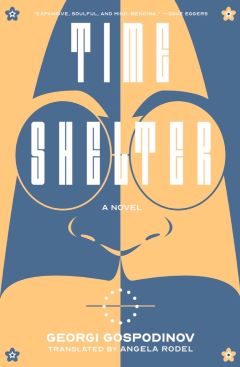
The 2023 International Booker Prize went to Time Shelter by Georgi Gospodinov, translated by Angela Rodel. It’s the first novel originally published in Bulgarian to win the prize, according to the Booker website. The premise is fascinating, the idea of recreating past decades to help Alzheimer’s patients. From the book’s description: “In an apricot-colored building in Zurich, surrounded by curiously planted forget-me-nots, Gaustine has opened the first ‘clinic for the past,’ an institution that offers an inspired treatment for Alzheimer’s sufferers: each floor reproduces a past decade in minute detail, allowing patients to transport themselves back in time to unlock what is left of their fading memories.” The prize is given to the best work of international fiction translated into English, selected from entries published in the UK or Ireland.

Demon Copperhead by Barbara Kingsolver won the 2023 Women’s Prize for Fiction. A very well-read friend told me it will be one of her forever favorites; she loved it that much. I highly respect her literary opinions and would say anyone who loves literary fiction must make room for this exceptional novel (including me). Many probably already have, considering it was an Oprah Book Club selection and a bestseller in 2022. The story takes place in the southern Appalachian Mountains of Virginia during the modern-day opiod crisis. From the Women’s Prize website: “For Demon, born on the wrong side of luck, the affection and safety he craves is as remote as the ocean he dreams of seeing one day. The wonder is in how far he’s willing to travel to try and get there.”

The Dublin Literary Award honors excellence in world literature and has been doing so since 1996, according to its website. The award is given to a single work of fiction in original English or translated into English. This year, it was given to Marzahn, Mon Amour by Katja Oskamp, translated by Jo Heinrich. It’s the story of a middle-aged woman who trains to become a chiropodist (a specialist in foot healthcare) in the Berlin suburb of Marzahn. From the book’s description: “Part memoir, part collective history, Katja Oskamp’s love letter to the inhabitants of Marzahn is a stunning reflection on life’s progression and our ability to forge connections in the unlikeliest of places.” Nominees for the award come from invited public libraries around the world. This year’s longlist of nominees included 70 books from 31 countries nominated by 84 libraries. If you’re wanting some armchair book browsing, the longlist offers fabulous treasures. (Check it out here.)

 The Longest Chapter
Absolutely loved Marzhan, Mon Amour. Such a heartwarming hymn of praise to friendship and community! I was so pleased it bagged The Dublin Literary Award, one of my favourite prizes.
LikeLiked by 1 person
Thanks for your comment – I’m so glad to hear you loved it. The book’s not yet available in the US, so I may order it from Waterstones. It sounds too good to miss!
LikeLiked by 1 person