
I wrote about the novel Switzy in a previous post about the longlisted candidates for the 2026 Booker Prize. It’s worth another mention, given the September publication date. This is Emma Cline’s third novel. Her debut was The Girls (2016), which I enjoyed, but I didn’t feel the desire to read Cline’s next books, a collection of short stories, and then The Guest (2023), her second novel. Switzy is described as “a mesmerizing portrait of an aging man’s last pilgrimage” in its book description. All I’ve been reading about it makes me think it’s a must read.
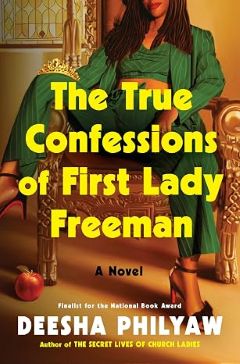
Deesha Philyaw’s a story collection, The Secret Lives of Church Ladies, won much praise and several awards. Its slim page count was published not by one of the conglomerate New York publishers in 2020 but the modest West Virginia University Press. I’m hoping her first novel, The True Confessions of First Lady Freeman, brings forth more of the gems experienced in her debut. The protagonist is Scharisse Freeman, wife of a megachurch pastor fifteen years her senior. As such, she is a first lady of his Hope in Christ Baptist Church, a spiritual and business empire with headquarters in Georgia. But Shar’s looked upon as too brash and too “of the world” by the other pastors’ wives, also First Ladies. On the eve of her 40th birthday, Shar finally gets their nod of approval with a coveted invitation to participate in the First Lady USA pageant. From the book’s description: “But as the pageant nears, a sensational scandal breaks with Schar at its center, and her carefully curated life implodes.” The description also says this new novel is “unflinchingly funny, frank, and splendidly unruly.”
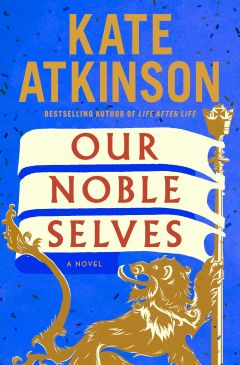
I fell off reading Kate Atkinson’s fiction when Life After Life failed in credibility for me. This new novel could be my restart, the story of a crime correspondent turned war reporter, Harry Flynn. He returns to Britain from Singapore in 1945 and takes a job with a government-affiliated festival, as the nation attempts to move forward postwar into better times. When a woman goes missing, Harry Flynn becomes the prime suspect; and yet, he can’t remember the evening they spent together, which happens to be the last time anyone saw the woman alive. While there’s a crime to be solved, there’s also this from the book’s description: “… Kate Atkinson turns her light on a nation reconstructing its image and the lengths to which some might go to manipulate the outcome. Witty, brilliantly plotted, and with an unforgettable cast of characters, Our Noble Selves paints a vivid portrait of a former empire struggling with its identity in the aftermath of war.”
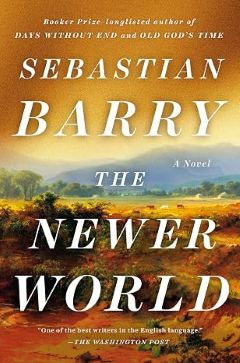
The Newer World, Sebastian Barry’s new novel, follows the life of Tennyson Bouguereau. Tennyson is born into an existence of slavery, working the tobacco fields on a small farm in “Union leaning” northwest Tennessee. Here he lives the years before and during the American Civil War. He keeps a low profile, so as not to incite violence from the neighboring Confederates who killed his mother. From the book’s description: “But when, in the wake of emancipation, a gang of defeated rebels descends on the farm, his choice to defend it and the people within makes Tennyson a wanted man. He will now not have the chance to till the ten acres he and his sister, Rosalee, have been given as their own.” Sebastian Barry is known for writing absorbing stories. He’s considered by many a master of his craft. Barry’s followers will appreciate appearances by characters from his award-winning novels Days Without End and A Thousand Moons. The book’s description says The Newer World is a “lyrical, visceral novel about what it is to survive, and what might be lost along the way.”
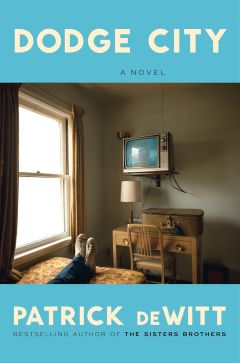
I enjoyed Patrick deWitt’s novels Ablutions and The Sisters Brothers. His September release Dodge City intrigues and also sounds fun, about a Vietnam War draft dodger in 1967. “A straitlaced, apolitical twenty-three-year-old” studying at UCLA gets expelled and loses his deferment. Deciding to leave the country, “[Lee Clarke] signs up at a drive-away car-delivery service, chancing into a showroom-new Jaguar bound for the East Coast.” His cross-country journey creates the opportunity to stop in on his immediate family. In the hands of deWitt, they’ll be material for absurdity and humor. Consider “his mother, engaged in a buoyantly manic and never-ending performance with her shut-in sibling” and “[Clarke’s] twin sister, Grace, a brash, young nurse-in-training mired in romantic drama at a Manhattan psychiatric hospital.” The book’s description says Dodge City is an “arresting portrait of a country in flux and a family in disarray,” and calls it “witty, moving, and delightfully off-kilter.”


I had a similar experience with Cline but Switzy was on my Booker wishlist, one of the few that were fulfilled.
LikeLiked by 1 person
Thanks for this further validation of Switzy! Regarding the wishlist … it’s always such a disappointment when few are contenders, isn’t it? (I ‘m very curious for the shortlist.)
LikeLiked by 1 person
It is indeed. Hoping to see Switzy and the Strout shortlisted.
LikeLiked by 1 person
I felt the same about Life after Life, a forgettable novel. But I did enjoy her previous work.Thanks for the tip, her new one sounds interesting.
LikeLiked by 1 person
I agree with the ‘forgettable’ description. I put Life After Life down halfway through and didn’t finish it. I couldn’t tolerate it. Our Noble Selves comes out tomorrow. I have so many other appealing books, I think I’ll bypass it. Let me know if you read it and what you think.
LikeLike