Ten-year-old Louisa shines a stolen flashlight on her bedroom ceiling at night. Months before, her father Serk carried a flashlight on a Japanese beach while walking the slippery breakwater and holding her hand. What she thinks about in her bedroom is her father’s flashlight landing noiselessly onto the sand. Serk disappeared that night on the beach, considered drowned. His body was never recovered. Louisa, found unconscious on the beach, doesn’t remember what happened.
The story turns back in time to the father’s beginnings, when his Korean parents came to Japan to find work and remained through World War II. Serk attended school using the Japanese name Hiroshi to hide his heritage. The Korean perspective is fascinating, especially what happens after the Japanese surrender, and then after the Korean War when Serk’s idealistic parents return to their homeland in North Korea. They believe the promise of paradise by the communist regime: an apartment with views of lush gardens, as well as jobs and healthcare. Serk, however, recognizes the trickery.
He bolts for America. There he studies at the University of Massachusetts, marries Anne, and accepts a job teaching engineering at a small college. He lies about his Korean family, pretending his parents and siblings in North Korea and a married sister in Japan don’t exist. He fears the family connection to communist North Korea — notably his parents willing return to the communist country — will affect how he’s known and perceived. And then, for his academic job, Serk must accept a working sabbatical at a college in Japan.
Susan Choi’s writing is careful and meticulously detailed. Her characters invite curiosity as she draws us into Serk, Anne, and Louisa’s domestic conflicts in Japan, including Serk’s volatility and remove, Anne’s self-isolating in their apartment, and Louisa’s nonstop nastiness toward her parents’ incompetence. The grim atmosphere would be intolerable except for the mystery of Serk’s disappearance that keeps us wondering.
It happens during the sabbatical, but Choi doesn’t resolve it then. Instead, she comfortably leaps ahead in time to Anne and Louisa’s lives in America after the unsolved disappearance. There’s college, two marriages, and children for Louisa; and for Anne, a chronic illness and a new, better marriage. Also, Anne’s illegitimate son Tobias, born before she met Serk and adopted by the father, shows up. He’s one of the most interesting characters in the book, a monk-like vagabond “floating through the world like a mote.”
The novel’s power comes in part from the mystery that opens the book but also from Serk’s secrecy about his Korean family. He suspects something that profoundly frightens him. Anne remembers a night she and Serk sat by the sea in Japan. An extremely bright light winked then flashed out across the water. Serk says to Anne:
That’s not a fishing boat. None of the fishing boats have a light that bright, that powerful. That’s something different.
He is so uneasy he can’t explain to Anne why it’s different.
Events and memories continue to offer insight into the mystery. Occasionally, someone turns up at just the right time, and if not a person then an object, like a letter, to move the plot forward. This feels too convenient, but it’s easy to forgive because this is a remarkable novel: precise in pacing, unemotional yet consuming, and rich in geopolitical drama. Readers may find themselves at the end going online to find out if what happened to Serk could have happened to others in real life.
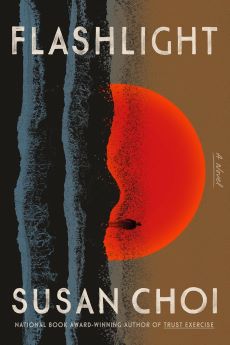
A version of this review aired on NPR member station WOSU 89.7 FM, broadcasting throughout Central Ohio. Flashlight by Susan Choi is published by Farrar, Straus & Giroux.

 The Longest Chapter