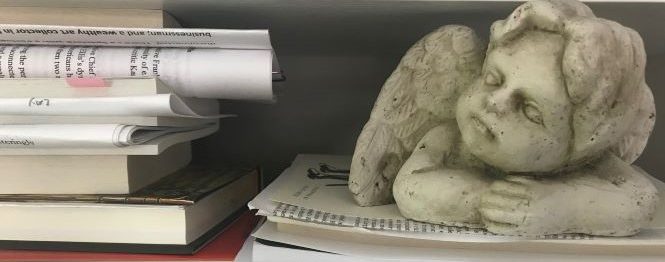
April was a month of slow reading. Two wonderful books that I loved, but they demanded more than usual attention. The novel took a while due to its thoughtful, dense narrative, the sentences eloquently written and deeply inset with meaning. I often reread them, pondering the author’s talent in subtle plot developments. The nonfiction book took me a while to read because of the detailed history involved. On top of that, as I’ve often shared, I’m a slow reader. A review of the nonfiction is coming soon; the novel is Shirley Hazzard’s award-winning The Transit of Venus.
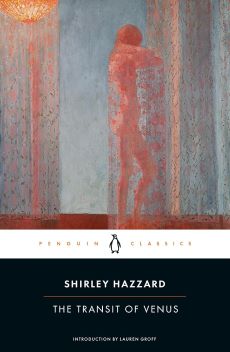
It opens with a young Ted Tice arriving in a raging thunderstorm at the house of noted astronomer Professor Sefton Thrale. He’s to be Thrale’s work assistant for two months. On this day, Ted meets Grace and Caroline Bell, sisters orphaned as little girls in their native Australia now living with the Thrales in post-war England. Grace is to marry the professor’s son Christian, currently away on government business. Throughout Part One, we come to know the background of the girls and Ed Tice, and we meet Paul Ivory, an up-and-coming playwright who’s engaged to the spoiled, removed Tertia, a neighbor of the Thrales. The beginning may seem slow for some, but it’s the critical foundation for the rest of the book. From hereon, the plot becomes emotionally and dramatically absorbing with Hazzard’s deft storytelling of their marriages, love affairs, and most of all Ted Tice’s unrequited love for Caroline. It’s an involving masterpiece spanning the mid-20th century in Australia, England, America, and Sweden, with Caroline and Grace anchoring the cast.
If you read the Penguin Classic edition, I recommend saving the introduction as an afterword to avoid spoilers and to get the most out of Lauren Groff’s overview and insights. Go into the story cold, and be patient with Part One. And something else: Watch for these two sentences that casually appear on page 12 of this edition.
In fact, Edmund Tice would take his own life before attaining the peak of his achievement. But that would occur in a northern city, and not for many years.
This is Hazzard’s foreshadowing, but also a drop of intrigue via the weight of now knowing this information. How Hazzard comes back around to this dramatic claim, in the final pages, is unforgettably stunning.
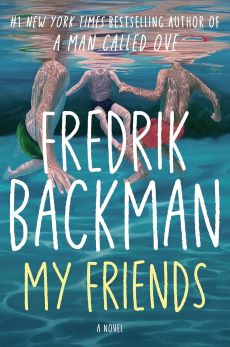
Fredrik Backman, bestselling author of A Man Called Ove, Beartown, My Grandmother Asked Me to Tell You I’m Sorry, plus others, has a new novel My Friends coming out this week. It’s described as “an unforgettably funny, deeply moving tale of four teenagers.” Louisa, an aspiring artist, is curious about “three tiny figures sitting at the end of a long pier in the corner of one of the most famous paintings in the world.” Her instinct tells her there’s a story here, and she goes in search of it. In a seaside town, twenty-five years ago, on an abandoned pier, three teens find refuge from their unstable families over long summer days. From the description:
Out of that summer emerges a transcendent work of art, a painting that will unexpectedly be placed into eighteen-year-old Louisa’s care. She embarks on a surprise-filled cross-country journey to learn how the painting came to be and to decide what to do with it.
Backman’s novel is the May Indie Next Top Pick by the American Booksellers Association. In an interview with the organization, answering the question “what do you hope readers take away from [My Friends],” Backman replied:
Whatever it is you want to create that you for whatever reason are afraid of pursuing, because you think you’re not good enough or not smart enough or whatever it is. You just have to go, try, fail, try again. ‘Fail better,’ like Samuel Beckett put it. Not for success or fame or fortune or any of that bullshit. Just for you.
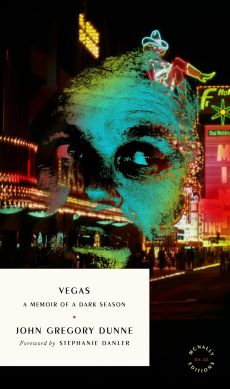
McNally Editions is bringing John Gregory Dunne’s Vegas: A Memoir of a Dark Season back into print in June. Originally published in 1974, this “neglected classic of first-person writing” tells of a nervous breakdown that drove Dunne to spend time in Sin City. He was supposed to write reportage of the city alone. He ended up writing a mix of fiction and nonfiction, or what the description says “blurs the line between autobiography and fiction, confession and reportage.” From the McNally Editions description:
The remarkable central characters are Artha, a student at cosmetology college by day, a sex worker by night; Buster Mano, a private detective whose specialty is tracking down errant husbands; and Jackie Kasey, a lounge comic who opens for Elvis at $10,000 a night and wonders why he is still only a ‘semi-name.’
I have an original hardbound copy of the book here beside me. It’s got that musty paper smell, a long-lived cocked spine, and stiff paper stock softened by years of being read. I like the inviting openness of the print style, too. Inside, Gregory Dunne finds a place to live on the Desert Inn Road at the Royal Polynesian. He writes:
It seemed the perfect place to spend that summer, a paradigm of anti-life. I did not gamble, cared not at all about the Mob and even less abut Howard Hughes. But there were other stories and other people, and there were days when I told myself that through the travail of others I might come to grips with myself, that I might, as it were, find absolution through voyeurism. Those were the good days.


I was so taken by your review of Transit that I ordered a copy, something I rarely do, usually relying on my library. But no luck there this time. I love books that cause me to ponder passages latent with beauty and meaning. Here’s to slow readers! And I’m sure the book will be a welcome addition to my small collection.
LikeLiked by 1 person
Mr. Turner, thank you so very much for sharing this with me. I encourage you, as I did in the review, to go in cold. Also, and this is something I newly learned, be aware that the author will write something incidental that will later carry great weight. To that I will say: Remember what she writes about the doctor who wants Caroline to wear glasses. Read it and move on, but remember it.
LikeLike
Perfect timing! Book just arrived yesterday. And tucked inside the paperback I found a newspaper cutout, of NY Times review, March 2021. A bonus!
LikeLiked by 1 person