A long time ago, I read Yukio Mishima’s The Frolic of the Beasts. I mentioned to a friend that this was my current read, and he gasped, MISHIMA! I realized from his expression this was an author with fans, and indeed, Yukio Mishima is one of Japan’s greatest authors.
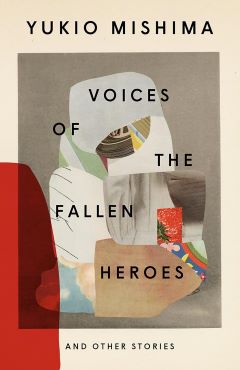
Vintage International this week published a collection of his short stories. If you haven’t yet discovered Mishima, it is a great way to be introduced to him. From the book’s description, here’s what some of the stories are about: “In the title story, Voices of the Fallen Heroes, a séance brings forth the spirits of young officers in the Imperial Army and the kamikaze pilots of World War II, who reproach the Emperor and mourn Japan’s modern decline. … [In other stories], a beautiful youth achieves eternal life through violent murder, and an ill-matched couple seal their fate with a pack of cards, tangled in the web of time and unfulfilled desire.”

Canadian author Michael Crummey continues to be one of my favorites, after reading his novels Galore, The Wreckage, and The Innocents. In 2024, he published The Adversary, so technically not new, but this week it’s out in paperback. Praise abounds for this novel, and for so many of his others. According to the novel’s description, the story is set on Newfoundland’s northern coastline, and begins with Abe Strapp about to marry the daughter of a rival merchant. The union will “cement his hold on the shore when the Widow Caines arrives to throw the wedding and Abe’s plans into chaos.” Described as a “ruthless act of sabotage,” the event opens a story of revenge, but it’s not without involvement of “the human heart that reveals itself to be the most formidable and unpredictable adversary.”

Another novel out this week, Andromeda by Therese Bohman, translator Marlaine Delargy, catches my attention for its plot that takes place at a publishing company: “A young woman starts as an intern at this venerated institution, and over many years gains more and more responsibility for its authors and books. All under the supervision of Gunnar, publishing director of the most prestigious imprint behind the finest literature, Andromeda.” A relationship develops between the two that’s described as “ambiguous” and “shifting,” dealing with tradition and modernity, expectations and reality. I find this enticing.

This is Fruchter’s debut, a novel that spans four generations of Eastern European Jewish women “bound by blood, half-hidden secrets, and the fantastical visitation of a shapeshifting stranger over the course of 100 years.” From the description, Shiva Margolin, a student of Jewish folklore, is recovering from the heartbreak of her first big queer love and grieving the death of her beloved father. She visits Poland, hoping her family’s mysteries will make more sense if she walks in the footsteps of her great-grandmother Mira, about whom no one speaks. The City of Laughter title refers to Ropshitz, Poland, where a wedding and an 18th century holy jester ignite the plot.

And then there’s The Suicides by Antonio Di Benedetto, translator Esther Allen. This is the third book in Benedetto’s Trilogy of Expectations, and I’ve not read the first two. I don’t think that matters — the plots of the novels aren’t connected, rather thematically linked. Set in the 1960s in a provincial city in Argentina, a reporter investigates three unconnected suicides. “Other suicides begin to proliferate,” from the description, “while a colleague in the archives sends him historical justifications of self-murder by thinkers of all sorts: Diogenes, David Hume, Emile Durkheim, Margaret Mead.” A slim novel at 176 pages, it intrigues me for the setting, and the timeline, leading up to Argentina’s “Dirty War” — and as entry into Benedetto’s trilogy that’s considered classic Latin American literature.

 The Longest Chapter