I’m not a reader of science fiction, and yet here I am with two books I’m getting ready to read this week that I’ve discovered are on the shortlist for The Ursula K. Le Guin Prize for Fiction. The prize is relatively new — the first award was given in 2022. Its intent is to recognize those writers Ursula Le Guin spoke of in her 2014 National Book Awards speech — realists of a larger reality, who can imagine real grounds for hope and see alternatives to how we live now. Reading up on the award, I learned the nomination process is public (interesting!). Every April, readers, authors, booksellers, publishers, librarians, and anyone else can nominate work they believe fits the criteria. Something else, which sets this recognition apart from the literary awards scene: A writer may receive the Prize only once. The winner will be announced on October 21, Ursula K. Le Guin’s birthday.

Samantha Harvey’s novel is described in one of the blurb’s as a “humbling love letter to Earth.” It’s a small book, the kind that feels lovely to hold, spanning 24 hours in the lives of six astronauts orbiting our planet. They are on one of the last space station missions before the program is discontinued. They are from America, Russia, Italy, Britain, and Japan. From what I gather reading the description, the narrative drama in Orbital isn’t some shocking event; it’s about what the astronauts take in. As they record “their silent blue planet,” from a contemplative remove that’s far above, I’m assuming the “event” is what we think and feel and come to realize, something that may create a change in what we take for granted.
Their experiences of sixteen sunrises and sunsets and the bright, blinking constellations of the galaxy are at once breathtakingly awesome and surprisingly intimate.
Meanwhile, just announced this week: Orbital is among the baker’s dozen of longlisted nominees for the prestigious U.K. Booker Prize. The author is in top company with Percival Everett, Claire Messud, Richard Powers, and others. More on that longlist, later.
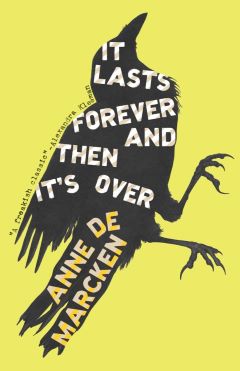
I’ll start by saying the protagonist/narrator in this novel heads west and into mind-boggling adventures. I’m drawing from the description. Also, she’s carrying a dead but laconically opinionated crow in her chest. She’s also dead but undead. Here I’ll refer to John Domini’s description in his review of It Lasts Forever and Then It’s Over in the Brooklyn Rail, where he says the narrative is an erudite zombie story. (Some of you might feel tempted to roll your eyes and scroll away at this point, but hang on.) What draws me is this “adrift yet keenly aware” heroine struggling with her new reality; and her fresh, funny, thoughtful, questioning voice that I’ve picked up from flipping through the book. Also, I’m intrigued by what the book explores: “Co-winner of the 2022 Novel Prize, this incredible life-after-death novel asks us to consider how much of what we love can we lose before we are lost? And then what happens?”
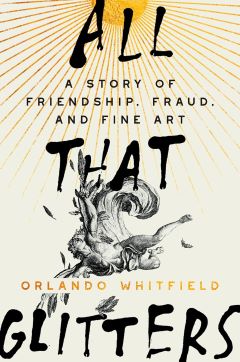
Moving on from Le Guin’s science fiction prize, this nonfiction fraud story coming out in August sounds fascinating. It’s written by the former friend and business partner of the fraudster. “Compulsively readable,” according to The Guardian. Orlando Whitfield and Inigo Philbrick became best friends at university and went on to open a company together, I&O Fine Arts. Both come from art backgrounds. Again, The Guardian: “Whitfield’s dad used to run Christie’s, Philbrick’s was head of a distinguished museum in Connecticut.” Philbrick’s tactics turned shady, which Whitefield lays out here in “thrilling detail,” capturing Philbrick’s spectacular rise in the world of art dealing and the dramatic fall. Hence an illustration of the famed faller Icarus on the book cover. From the publisher’s description of All That Glitters: A Story of Friendship, Fraud, and Fine Art :
Inigo seemed brilliant, but underneath the extravagant façade, his complicated financial schemes were unraveling. With debt, lawsuits, and court summonses piling up, Inigo went into a tailspin of lies and subterfuge. At around the same time, Orlando would himself experience a nervous breakdown and leave the art world for good.

I’m eager to read Japanese author Yoko Ogawa’s new novel coming out August 13. I missed reading her previous novel, The Memory Police, which got much praise, but I’ve read Hotel Iris and The Housekeeper and the Professor. The latter remains an often remembered favorite, what I called a gentle gem and a book of peace and hope in this brief review. The publisher says Mina’s Matchbox is about an affluent Japanese family navigating buried secrets, and their young house guest Tomoko who uncovers them. What draws me is this part, where the publisher writes:
Yoko Ogawa invites us to witness a powerful and formative interlude in Tomoko’s life. Behind the family’s sophistication are complications that Tomoko struggles to understand…
It’s 1972 when twelve-year-old Tomoko leaves her mother to stay with her aunt’s family who live in a coastal town. The aunt is an enigma and an outlier in her working-class family, given her magnificent home with sprawling gardens and her successful foreign husband. Tomoko’s thirteen-year-old cousin Mina involves Tomoko in “an intoxicating world full of secret crushes and elaborate storytelling.” I have much hope for this new story.

 The Longest Chapter