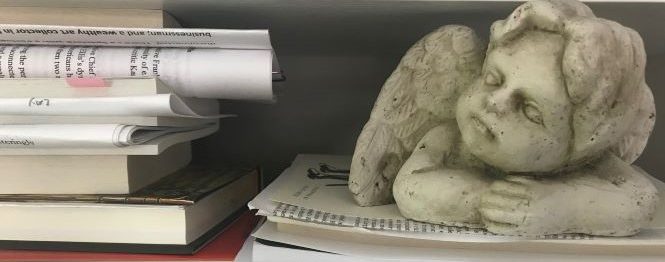
How do you read during the dog days of summer? For me, I embrace two books at a time, one fiction, one nonfiction. It creates what feels like a cool splash of difference, changing over from one during the day to the other at night. My corgis Fitzgerald and Daisy Fay demand air conditioning, but these recently cool nights I’ve turned it off and slid open the windows to hear the humming cicadas while I read. Below are my recent literary companions, with one coming next week.

Amy Clampitt published her first book of poems when she was 63 years old. She “rose meteorically to fame,” according to the dust jacket of a new biography, “launching herself from obscurity to the upper ranks of American poetry all but overnight.” She is, as her biographer Willard Spiegelman states, “one of the Patron Saints of Late Bloomers.” Stories of late-in-life success fascinate me, as they thumb their nose at what’s expected in a life journey, how it should be lived and what should happen. These stories tell us to stay alive and open to unexpected marvels. In Nothing Stays Put: The Life and Poetry of Amy Clampitt, Spiegelman mines Clampitt’s papers and poems to unravel what lead up to her sudden fame and discovers “a woman of dazzling intellect, staunch progressive politics, and an inexhaustible sense of wonder for the world and the words we’ve invented to describe it.” The book’s title comes from an Amy Clampitt poem (read it here). It doesn’t escape me that last month I promised myself I’d read James Atlas’s biography of the poet Delmore Schwartz (still haven’t). I’m not sure what’s going on with wanting to read yet another poet’s biography, and that’s not all: I recently purchased a book about the last years of Ohio-born poet Hart Crane.
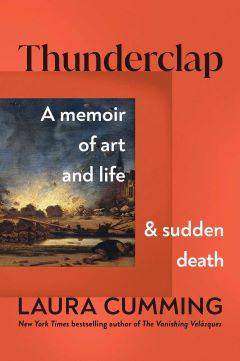
I’m not one for art museums. Case in point, during a Paris vacation, I included only a brief (people spend hours) 60-minute visit to The Louvre using a traveler’s guide that outlined a swift pathway to the highlights. Venus de Milo, check. Mona Lisa, check. A Woman Drinking with Two Gentlemen, check? “Seen but overlooked” is the way Laura Cumming describes the productive Dutch 17th century art era in her new book Thunderclap: A memoir of art and life & sudden death. I may have blown past Pieter de Hooch’s famous painting with a cursory glance, but not so the prose in this enticing book. Cumming is the art critic for The Observer (London), and to read her descriptions of paintings by 17th century Dutch artists is like hearing someone singing from deep within a mysterious forest. She brings out exquisite details painted so purposefully, their significance and meaning, creating seductive engagement between the subject and her readers. One artist in particular anchors the book, Carel Fabritius, a “nowhere man” who died when a gunpowder warehouse explosion devastated the city of Deft on an October morning in 1654. His house fell in on him. Cumming’s compassion for Fabritius and admiration of his talent reach out of the page with unusual closeness, as if he were a dearly loved brother.
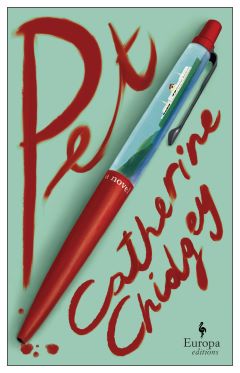
The pet in the title of this psychological thriller refers to a teacher’s pet, that being Justine, a 12-year-old hoping to become the favorite of a “glamorous, charismatic new teacher.” Pet takes place in New Zealand in the 1980s. (Author Catherine Chidgey is a New Zealand novelist and short story writer.) The plot turns, though, on mysterious thievery at the school. From the book’s description:
…when a thief begins to target the school, Justine’s sense that something isn’t quite right grows ever stronger. With each twist of the plot, this gripping story of deception and the corrosive power of guilt takes a yet darker turn. Justine must decide where her loyalties lie.
Chidgey is the author of Remote Sympathy, which was a nominee for the prestigious Women’s Prize for Fiction and the Dublin Literary Award. As I’ve yet to read Pet, I’m hesitant to read any forecasting reviews out of concern for spoilers. Suffice it to say, I’ve seen it written that fans of Donna Tartt’s The Secret History and Muriel Spark’s The Prime of Miss Jean Brodie should take note. I’m hoping Pet will be topnotch. It releases on Tuesday, August 8.

The Oppermanns tells the story of a bourgeois German-Jewish family that owns a long-standing, prosperous furniture company in Berlin. The story takes place between winter 1932 and summer 1933, when Hitler and his National Socialist German Worker’s Party come into power. Tension simmers under daily, increasingly disturbing events: The furniture business must merge with an Aryan competitor to protect itself; a son is threatened with expulsion from school unless he apologizes for a true but unfavorable statement he made about a German hero; an attorney recommends Gustav Oppermann send his money out of Germany but would that be overreacting? The Reichstag, home of the German parliament, burns. Storm Troopers harass and beat and imprison Jewish citizens without reason. It’s just temporary madness, isn’t it? Things will get better, won’t they? Here’s where the tension for readers elevates: The novel was originally published in 1933. In other words, author Lion Feuchtwanger wrote it as Hitler’s fascism was taking hold. Feuchtwanger didn’t know what was coming after 1933, but we do. Nevertheless, early in the book, one of the Oppermanns makes this ominous observation:
What history had taught him was surprise, a tremendous surprise that each time those in jeopardy had been so slow in thinking about their safety. Why, in the devil’s name, had so many French aristocrats been so asinine as to be caught in the Revolution, whereas any schoolboy nowadays knows that the writings of Rousseau and Voltaire, decades earlier, had indicated precisely what would happen?
The Oppermanns is published by McNally Editions, a new publishing line with a stated mission of reissuing books “that are not widely known but have stood the test of time, that remain as singular and engaging as when they were written.” In this reissued edition, the translation is introduced and revised by Joshua Cohen, author of the Pulitzer Prize-winning novel The Netanyahus.

 The Longest Chapter
All the books look intriguing, as usual. And years ago I binged on Muriel Spark, although we certainly didn’t call it that back then. I am making a serious effort to set aside time to read more actual books, as opposed to the fascinating on-line articles that conveniently pop up on my phone. I am reading Tessa Hadley’s new book of short stories right now. Thanks for adding to my list.
LikeLiked by 1 person
Muriel Spark would be a great author to binge read. Glad to hear you’re getting back to books! The new Tessa Hadley has gotten great reviews.
LikeLike