She started out with such promise and then disappeared from the literary stage. Bette Howland published her first book in 1974, W-3, a memoir about time on a psychiatric ward in a Chicago hospital, and then her second book in 1978, Blue in Chicago, a collection of short stories. That year she was awarded a Guggenheim Fellowship. Her third book, Things to Come and Go: Three Stories, came out in 1983. A year later, she was awarded a MacArthur Foundation Fellowship, often referred to as a “genius grant.” That’s a financial windfall for any budding author, but even more so for Bette Howland, given she’d been living a life barely keeping her head above the poverty line.
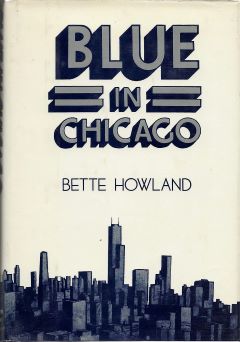
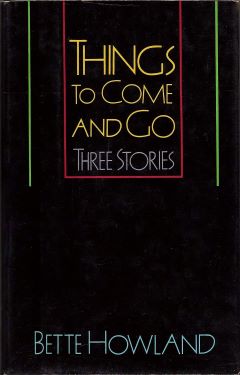
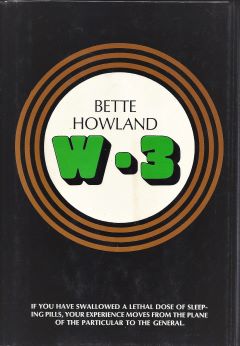
Howland didn’t publish anything else until 1999, when the literary magazine TriQuarterly published her novella “Calm Sea and Prosperous Voyage.” She wasn’t heard from again in print, not until Brigid Hughes, founder of the literary magazine A Public Space and the publishing company A Public Space Books, happened upon Howland’s memoirW-3 in a bargain books bin. Impressed by the writing, she went in search of more. Hughes in 2015 published a porfolio of Howland’s work in her literary magazine, including an essay, short stories, and correspondence from Howland’s famous friend, the author and Nobel Laureate Saul Bellow. So it began, Bette Howland’s literary rediscovery. (Images above are of the first editions that went out of print.)
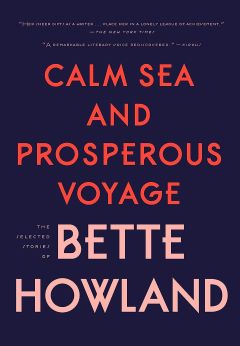
Brigid Hughes next brought Bette Howland’s short stories in Blue in Chicago together with the TriQuarterly novella. She published the book in 2019 as Calm Sea and Prosperous Voyage. This put Howland’s work back in print. Publishing house Picador released a paperback edition of the book, but re-taking the Blue in Chicago title (see below). It’s the edition I’m reading now, preferring the cover illustration. These stories that are so sharply observed, funny but not without sadness, are said to reflect Bette Howland’s own life. From the book’s description:
With direct and powerful language in the tradition of Lucia Berlin, Kathleen Collins, and Grace Paley, Howland chronicles the tensions of her generation. She was an outsider; an intellectual from a working-class neighborhood in Chicago and an artist chipped away at by poverty and self-doubt.
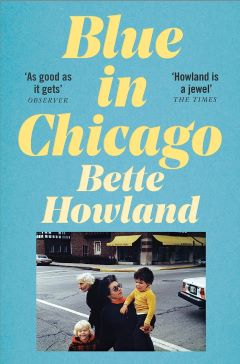
From what I’ve read in several sources, it’s said Bette Howland didn’t stop writing but stopped publishing. She’s believed to have suffered from a loss of self-confidence due to perceived expectations after receiving the “genius grant.” She died in 2017 at age 80. She knew about her portfolio of work published in the Public Space literary magazine, but she died before her book of rediscovered work was published. You can read more about Bette Howland, including her friendship with Saul Bellow, in The Washington Post (go here) and on LitHub (here).
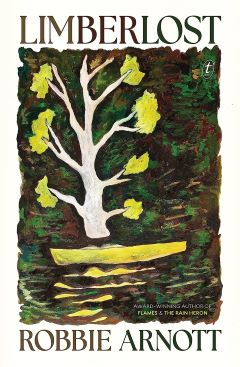
The other night, I finished reading Limberlost by Robbie Arnott, a story about 15-year-old Ned West who saves his money to buy a boat. He lives in Tasmania with his reserved father and opinionated sister on the family orchard. His two brothers fight in a faraway, unnamed war, which I assumed to be World War II. Ned spends the summer trapping and shooting rabbits to sell their pelts, which are made into hats for soldiers. It’s the source of his savings for the boat, which he dreams of sailing on the river by the orchard. He keeps it a secret, this dream that gives him something to focus on and belief in and hope for while worry hovers about his brothers and also the orchard’s financial insecurity. As events unfold, Ned finds an affordable, castaway dinghy, with a broken mast, no rudder, and no sail, made of precious Huon pine, prized for building boats. Chapters about Ned’s future life – marriage, children, his own orchard – are interspersed with the summer’s youthful, poignant challenges. This gives the story its broad meaning and resonance. It also draws us further into Ned’s inner world, the how and why his life becomes one where he is “powerfully loved and profoundly alone”.
Limberlost is shortlisted for the Miles Franklin Literary Award annually given to “a novel which is of the highest literary merit and presents Australian life in any of its phases.” At this point, Limberlost isn’t published in the U.S., but maybe it will get here, especially if it wins the award. Nevertheless, you can purchase Limberlost on bookshop.org. Just click on the U.S. flag in the upper right-hand corner, and it will take you to U.K. independent bookstores. As of this writing, Robbie Arnott’s The Rain Heron published in the U.S. has a 4+ rating on Goodreads from more than 3,000 readers, to give you an idea of his writing power. Limberlost’s rating is even higher. The image above is the lovely cover illustration of the Australian edition of the book.

 The Longest Chapter
I have a proof of the Bette Howland buried somewhere in my pile. Given how much I enjoyed Lucia Berlin’s stories, I’ve no idea why I didn’t get around to reviewing it. Must have been lack of time.
So glad you enjoyed LimberLost. I’ve loved all three of Arnott’s novels. Delighted to see he has such a high rating on Goodreads.
LikeLiked by 1 person
I think you’ll enjoy Bette Howland’s style and voice. It feels very original to me. I used to live in Chicago and so that pulls me even more toward her work, which I’m glad to have found. I found Robbie Arnott’s novel by reading your blog, A Life in Books, which I highly recommend to anyone reading this comment.
LikeLiked by 1 person
Lovely to hear that. Thank you, and I’ll be sure to get to the Howland. Knowing the setting must have added something to reading it.
LikeLiked by 1 person