Several years ago, I was fascinated by the nonfiction book Field Notes on Science & Nature edited by Michael R. Canfield (2011). I didn’t read it cover to cover. It wasn’t that kind of attraction. I turned pages and read randomly, interested in illustrations of the handwritten notebooks and also in the chapter titles, such as “Note-Taking for Pencilophobes” and “Letters to the Future.” In the introduction, Mr. Canfield raises concern about the status of field notes in the age of technology. He also references “the ample and often accessible examples of notable nineteenth- and twentieth-century scientists.”
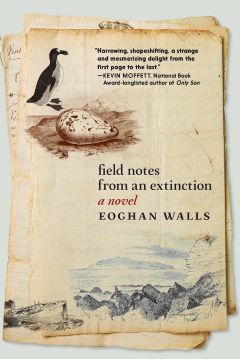
Field Notes from an Extinction is a new novel to be released next week. It has nothing to do with the aforementioned book other than this odd allure I have for the subject. Author Eoghan Walls tells a story about an ornithologist, Ignatius Green, doing fieldwork concerning the flightless Great Auk. It’s 1847. He’s stationed on an uninhabited island off the coast of Ireland during the country’s historic Great Famine, when diseased potato crops failed to thrive year after year. Ignatius is a focused English scientist, sent to the island by the Royal Society, indifferent to the horrific hunger, until locals from a nearby island steal from his monthly shipment of supplies sent from Londonderry. They’ve also tucked a 10-year-old feral girl into the shipment. “…here is a story of one man’s growing humanity amidst famine and extinction,” says the description. Field Notes from an Extinction is written in the form of a notebook of observations. I have high hopes for it.
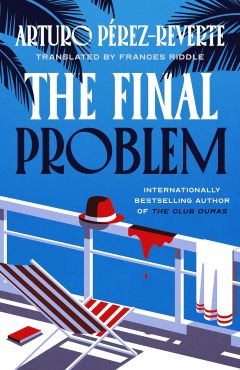
It’s 1960 in this locked-room mystery that’s sleuthed by Ormond Basil, an aging, out-of-work actor well-known for portraying Sherlock Holmes in the movies. He’s stranded on a Greek island with an old friend who’s a movie producer and a love interest who’s an opera diva. A guest at the hotel is found dead, likely suicide, except there are signs of foul play. A second suspicious death occurs, and it’s clear there’s a killer among them. Ormond Basil assumes his movie role of the great Baker Street detective, parsing the intricate clues that strangely resemble the work of Sir Arthur Conan Doyle. The Final Problem is being described as a love letter to Golden Age Detective Fiction (think Agatha Christie, Dorothy L. Sayers, Ellery Queen, and Mary Roberts Rinehart, for example). This is a new novel by Arturo Pérez-Reverte, who also wrote the bestselling literary thriller The Club Dumas. I’ve not yet read his work; this one sounds entertaining.
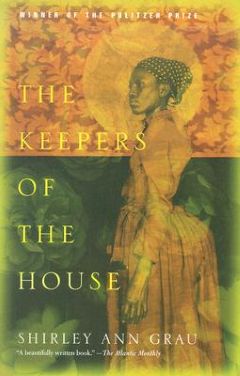
I recommended The Keepers of the House on our last All Sides Weekend Books, describing it as a good story to spend time with as it builds to a stunning surprise. Published in 1964, it won the 1965 Pulitzer Prize in Fiction. It’s engrossing and unforgettable, eloquently bringing alive the weather, land, crops, and swamps of the Deep South; and most important, submersing us in the characters’ lives. Abigail, the granddaughter of William Howland, tells the story of the Howland family through several generations, focusing on her grandfather – how William left the study of law to run the family estate, married, and became a widow at 30, bringing up his daughter Abigail through the 1920s and early 1930s. Abigail returns to the homestead with her daughter, Abigail, after a failed marriage. The grandfather we come to know, as his granddaughter knew him, is a confident, kind, hardworking, private, and highly respected man whose lumber and cattle employ the small town with the mills and slaughter houses. It is known among the locals throughout the county that his Black housekeeper, Margaret Carmichael, is his mistress, a relationship we come to understand is of mutual love. In the novel’s introductory pages, standing on the porch of the estate house, Abigail the granddaughter says:
I stand in the pitch darkness and listen to the sounds of voices that roar around in my head and watch the parade of figures that come and jostle for attention before my eyes. My grandfather. My mother. Margaret. Margaret’s children: Robert and Nina and Crissy.
Abigail also reveals that she is fighting “an entire town, a whole county … but I am not particularly afraid.” What that is all about is what unfolds. A must read.

I’ve had a long interest in books about the Vietnam War, from the fiction of Tim O’Brien and Karl Marlantes to the nonfiction of Benjamin Fall and Michael Herr. Done in a Day: Telex from the Fall of Saigon by Elisa Tamarkin, as written in the description, turns on a single event: the April 30, 1975, departure of the last helicopter evacuating civilians from the rooftop of the U.S. embassy in Saigon. The author’s stepfather, Bob Tamarkin, the Saigon bureau chief for the Chicago Daily News, was on that helicopter. He was the last American correspondent to leave Saigon as it fell. His report was filed from a naval ship on the South China Sea at a time when no other telexes were going through. Interesting also that the book considers the imminent disappearance of war coverage in city newspapers “…and of the newspapers themselves—once proud, in the words of the Chicago Daily News, of bringing readers the ‘literature of the day’ that was ‘done in a day.’” This book will be released April 6. It’s described as a combination of history, criticism, and memoir.

 The Longest Chapter