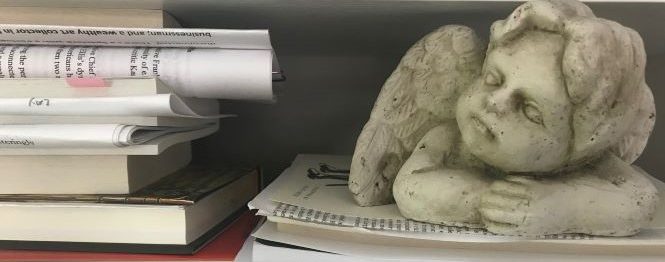
Tolstoy’s “War and Peace” in 2010
December 29, 2009
It’s time to fess up to that which I’ve ignored or procrastinated this past year and make a literary New Year’s resolution.
The first day of a new year presents a blank page for a fresh start. As all writers know, though, you can begin the same story over and over again on a blank new page, but continuing it onto the second page and beyond is the hardest part. April 1st, the Fool’s Day, should be designated as the official checkpoint for the status of New Year’s resolutions. We’ll see on that day where I stand with my resolution to read Leo Tolstoy’s War and Peace in 2010.
In the summer of 2008, I bought the highly praised Richard Pevear and Larissa Volokhonsky translation of this Russian classic intending to dig in for the long haul of reading. What sets the Pevear and Volokhonsky translation apart is their absolute fidelity to Tolstoy’s use of language, including syntax and his tendency to repeat words. Other translators have edited Tolstoy’s repetitiveness. Pevear and Volokhonsky preserve it.
Also, Tolstoy wrote some of the story in French. Pevear and Volokhonsky are the first and only translators to keep intact all the French passages, according to Orlando Figes in The New York Review of Books (11.22.07). Figes writes, “Overall, about 2 percent of the book is in French — itself almost enough to make up a short novel — about ten French words for every page. In the original (1868 – 1869) edition Tolstoy translated the foreign passages into Russian in footnotes, but in the revised 1873 edition he cut out all the French (‘I think it is better without it,’ he wrote to the critic Nikolai Strakhov), only to restore it in the later editions.”
All in all, reading Peaver and Volokhonosky means reading an edition that’s as close as one can get to Tolstoy’s original Russian creation, but I barely dented the 1,500 pages before putting their translation aside. The problem was the French. Even though I studied French for 10 years in high school and college, and off and on in my adult life with a tutor, the passages became interruptions to the story’s flow. I decided to read the Louise and Aylmer Maude translation, written in the 1920s and still considered to be one of the best. (No long French passages. More comfortable translation.) I looked for The Maude in used bookstores and finally found it in the spring of 2009. I promised myself I’d read it this past summer, but I didn’t keep that promise. Let’s see if I keep it in 2010.
No monkey business here
December 27, 2009
I discovered Steve Jenkins’ Never Smile at a Monkey: And 17 Other Important Things to Remember on The Book Design Review blog. It’s listed there as a favorite book cover for 2009.
The cover alone didn’t attract my attention but also the 18 interior, cautionary maxims that feel appropriate during this time of New Year’s resolutions. Yes, let us declare never to smile at a monkey, stare at a spitting cobra, touch a tang or corner a cassowary.
The point of this children’s book is there are dangerous animals we know to avoid, and there are dangerous animals we don’t realize are dangerous. Like the rhesus monkey, who will interpret your show of smiling teeth as aggression and respond violently. And the shy cassowary that can deliver a lethal kick with its sharply clawed feet.
Who knew? I didn’t. Never Smile at a Monkey: And 17 Other Important Things to Remember is a children’s picture book, but’s it fun for curious adults, too. The illustrations of the animals are collages of cut and torn paper.
An illustration of peace and joy
December 22, 2009
Best unread books
December 19, 2009
It’s hard to ignore a book someone says they’ve read three times. I’m not talking about blockbuster seductions like Twilight. I’m talking about books like The Spare Room by Helen Garner. It’s noted in a recent Guardian article, landing on a list of the decade’s best unread books. (Isn’t that an interesting list.) Granted, it’s the book’s publisher making the statement – “I’ve read it three times now and on each occasion my awe at what Garner has achieved increases.” Nevertheless, how many books would a publisher read three times and feel awe each time?
I picked up The Spare Room from the library this morning. From the dust jacket, here’s what it’s about: “How much of ourselves must we give up to help a friend in need? Helen has little idea what lies ahead — and what strength she must summon — when she offers her spare room to an old friend, Nicola, who has arrived in the city for treatment of her illness.”
Kudos to The Guardian for seeking the decade’s unsung literary bests from publishers, agents and translators. The article states: “While people are busy ranking the hit books of the last 10 years, many a publishing insider is quietly mourning a volume that unaccountably never made the ‘best of’ or bestseller lists, but should have.” To get the other 11 books on the list, go here.
Audubon’s camera: “Waterbirds”
December 16, 2009
Theodore Cross’s photography book is being marketed by W. W. Norton as the book John James Audubon would have made if he had used a camera.
That’s one heck of a claim. Audubon (1785-1851) painted every known bird in North America in life-size paintings that became the famous Birds of America. Jonathan Rosen, in The Life of the Skies: Birding at the End of Nature, writes this about the 19th century artistic ornithologist:
“His birds are weirdly anthropomorphic (his white pelican looks as if it might consult a pocket watch before flying) and yet they are preternaturally realistic. They look like people who have been turned into birds and might turn back at any enchanted moment, but they have the simultaneous effect of returning their viewers to the wilderness.”
There are 179 color photographs in Waterbirds’ 344 pages. According to the publisher’s website, “These breathtaking photographs are accompanied by gracefully written field notes and fascinating accounts of the birds’ habits and habitat. The book is introduced by an extended anecdotal essay giving insights and observations of the extraordinary man who, at age eighty-five, is as eager to track down an eagle in Alaska as he was when he began photographing in midlife.”
The book’s definitely caught my attention (Oh Santa!) as it has that of others. The New York Times featured Waterbirds in their Science section, and Melissa Block interviewed Cross for NPR. Even the Brits have listed the book in a Christmas roundup, which features one of Cross’s gorgeous photos. Typical to impressive photography books, Waterbirds is pricey ($100 on the publisher’s website and a bit less at online booksellers). Nevertheless, it’s out of stock in several places, so the cost apparently is not a shopper stopper.
Of all the slideshows viewed, I prefer the The New York Times and The Picture Show. The Barnes & Noble site doesn’t offer many images, but it does give a blurry interior page display, so you can get an idea of the book’s layout. In the YouTube version, the voiceover is annoying.
The unforgettables: 2009
December 14, 2009
Last Friday, on WOSU 820 AM NPR News All Sides Weekend, we shared the unforgettable books we read in 2009. Because I mentioned most but not all of my unforgettables, I thought I’d offer the complete list here on TLC. But first, what makes these books unforgettable? Lyric prose. Unsettling themes. Hypnotic storytelling. Unique voices and characters. Pure escape. And combinations thereof. More simply put, when thinking back on the reading year, they are the ones that come to mind, like a memorable event.
Classics
Michael Herr’s Dispatches (Herr was a war correspondent during the Vietnam War; this is his incredible report on that experience published in 1977.)
John Fowles’ The Collector (TLC post)
Erich Maria Remarque’s All Quiet on the Western Front (TLC post)
Philip Roth’s Good-bye Columbus (Roth’s first work of fiction published in 1959)
Richard Yates’ Revolutionary Road (TLC post)
Literary fiction
Colum McCann’s Let the Great World Spin (winner of the 2009 National Book Award in fiction)
A. S. Byatt’s The Children’s Book (finalist for the 2009 Man Booker Prize; TLC post)
Yoko Ogawa’s The Housekeeper and the Professor (TLC post)
David Vann’s Legend of a Suicide (A novella and five stories set primarily in Alaska; the narrator struggles to understand his father’s suicide.)
Empty calories
Josh Bazell’s Beat the Reaper (Bazell’s debut consumed a Saturday afternoon, but I couldn’t for the life of me, a few days later, summarize the plot other than to say the Mafia is involved; a total entertainer.)
Isabel Gilles’ Happens Every Day (A typical divorce memoir told with a Siren-like voice. TLC post)
Important books (both are novels)
Nini Holmqvist’s The Unit (TLC post)
Xiaoda Xiao’s The Cave Man (TLC post)
Memoir
Michael Greenberg’s Beg, Borrow, Steal: A Writer’s Life (TLC post)
Poetry
W. S. Merwin’s The Shadow of Sirius (2009 winner of the Pulitzer Prize for Poetry; TLC post)
Xiao’s “The Cave Man”
December 10, 2009
Xiaoda Xiao’s debut novel immediately drops us into a solitary confinement cell built into the natural concave of a hillside. The decade is the 1970s and the place Chairman Mao’s communist China. Prisoner Ja Feng, wrongfully accused of a counterrevolutionary crime, crouches in the dark, concrete space too small to stand up in. He survives the nine-month confinement by focusing on his dreams and the past and by trading notes through a food hole in the iron door with his neighboring cell mates.
The Cave Man is a small book of large meaning written in articulate, unadorned prose. The simplicity of the words lure us into the unfolding of Ja Feng’s inhuman circumstances that are depicted in vivid scenes and a calm, emotionally distant tone. Such contrasts of simple versus inhuman and vivid versus calm create the tragic tension in this powerful book, bringing to the forefront the awful grace of man’s will to survive, no matter what.
Ja Feng is pardoned from his crime after Mao’s death and a change in government leadership. With his freedom comes a new prison of psychological suffering. He screams in his sleep and follows people in the street, wondering what it’s like to be normal. Eventually, Ja Feng finds employment as a plumber and then a salesman, building designer, restaurant owner and artist. He fails at or gets fired from each endeavor, sometimes for political reasons, sometimes because he’s perceived as mentally ill, but mostly because he’s feared and misunderstood. Even though he finds his way to the United States for graduate school, in the end, Ja Feng cannot overcome the brutality of his past confinement.
Xiaoda Xiao, like his protagonist, spent seven years in a Chinese forced labor camp in the 1970s. This talented author accidently ripped a poster of Chairman Mao and was accused of committing a counterrevolutionary crime. It’s not surprising, then, that The Cave Man convincingly unsettles us, especially with the knowledge that Ja Feng, as a fictional representation of many real-life Chinese prisoners, although freed from his solitary cell, could never live freely again.
This is a moving story and an important book that sheds light not only on historical events but present ones. Consider two recent news reports, one from The Associated Press, one from The New York Times. Their titles speak the relevance:
While holiday shopping … 5 books
December 7, 2009
I noticed these five books along the way in my holiday gift-giving search-and-discover efforts. The common theme is they’re interesting and different, qualities often an advantage when shopping for readers and book lovers. And so, to share.
Traveller: Observations from an American in Exile by Michael Katakis
(Simon & Schuster, August 2009)
This travel memoir won an AIGA book design award. Here’s the description of its content from Burton & Park Publishers, where you can also hear the author read from his book: “Traveller is a collection of letters and journal entries that bring the immediacy of experience together with perceptive reflections of the authors (sic) own past. The entries in this volume are not travel guides. They are personal, like letters from the most desirable sort of friend. This friend carries you with him as he meanders through the medina in Fez or into the hills of Gallipoli. His voice is such that you can almost smell the herbs and dusty soil of Crete. Always you are introduced to the people he meets along the way.”
What They Didn’t Say: A Book of Misquotations edited by Elizabeth Knowles (Oxford University Press, December 2006)
Following is a sample entry from the publisher’s website:
A good day to bury bad news.
In the hours following news of the terrorist action in America on 11 September 2001 (“nine-eleven”), the British government adviser Jo Moore sent out an email reading, “It is now a very good day to get out anything we want to bury.” This was leaked and widely reported; public shock and distaste were heightened by its becoming fixed in the general consciousness in the form, “a good day to bury bad news.”
Bulb by Anna Pavord
(Mitchell Beazley, November 2009)
From the New York Times: “Any gardener who couldn’t put down Anna Pavord’s The Tulip, published by Bloomsbury in 1999, will probably devour Bulb… The book includes 600 of her favorite bulbs, enough for a lifetime, writes Ms Pavord, who gardens in Dorset, England.” From Chicago Now: “Sometimes, these kinds of specialty books only skim the surface of the variety of bulbs available. They seem to be published just to boost sales. When the UPS guy dropped off Bulb I sat the package to the side, certain that it would be disappointing, like so many other books on bulbs. Later that evening, I opened the package and when the book slid out and I held it in my hands for the first time… I was in awe.” A slide show on Chicago Now gives a glimpse inside the book.
James Lees-Milne: The Life by Michael Bloch
(John Murray, November 2009)
The UK Telegraph says, “an exceptional biography: lively, perceptive and well-written.” James Lees-Milne (1908-1997) is one of the great diarists of the 20th century. He’s known for rescuing and preserving many of Britain’s country estates from neglect after World War II when families could no longer maintain them. He transferred the houses from private ownership to England’s National Trust. The London Review of Books’ report on this biography indicates an interesting life and well-written, absorbing book.
The Annotated U.S. Constitution and Declaration of Independence edited by Jack N. Rakove
(Belknap/Harvard University Press, November 2009)
This “new in cloth” edition is on back order at the Harvard site but available on Amazon, Borders and Barnes & Noble. Not a sexy title for gift-giving except for that person obsessed by Washington D.C. politics. (I’ve certainly forgotten what I learned in school, oh so many years ago.) The Harvard website says, “When he glosses the Constitution, the Bill of Rights, and the subsequent amendments, Rakove once again provides helpful historical background, targets language that has proven particularly difficult or controversial, and cites leading Supreme Court cases.” (I learned something new. The verb “gloss” when used with an object means annotate.)


